
Digital Marketing Research Work Portfolio

A website can look polished on the surface but have some surprising amount of work underneath. For Study Navigator, the real learning started behind the pages, with auditing what was broken, research about what competitors were doing, researching keywords, analysing social platforms, and exploring how brands use paid advertising.
This page brings together that practical work in one place.
Table of Contents
- Banners & Designs
- Site Audit
- SEO Audit
- Competitor & Keyword Research
- Social Media Analytics
- Ads Research & Analysis
- Frequently Asked Questions
What This Portfolio Includes
This portfolio documents practical digital marketing research carried out through the Study Navigator project. Rather than presenting only theoretical knowledge, the work is based on actual website observations, competitor research, keyword analysis, social media data and advertising research.
Banners & Designs






SITE AUDIT
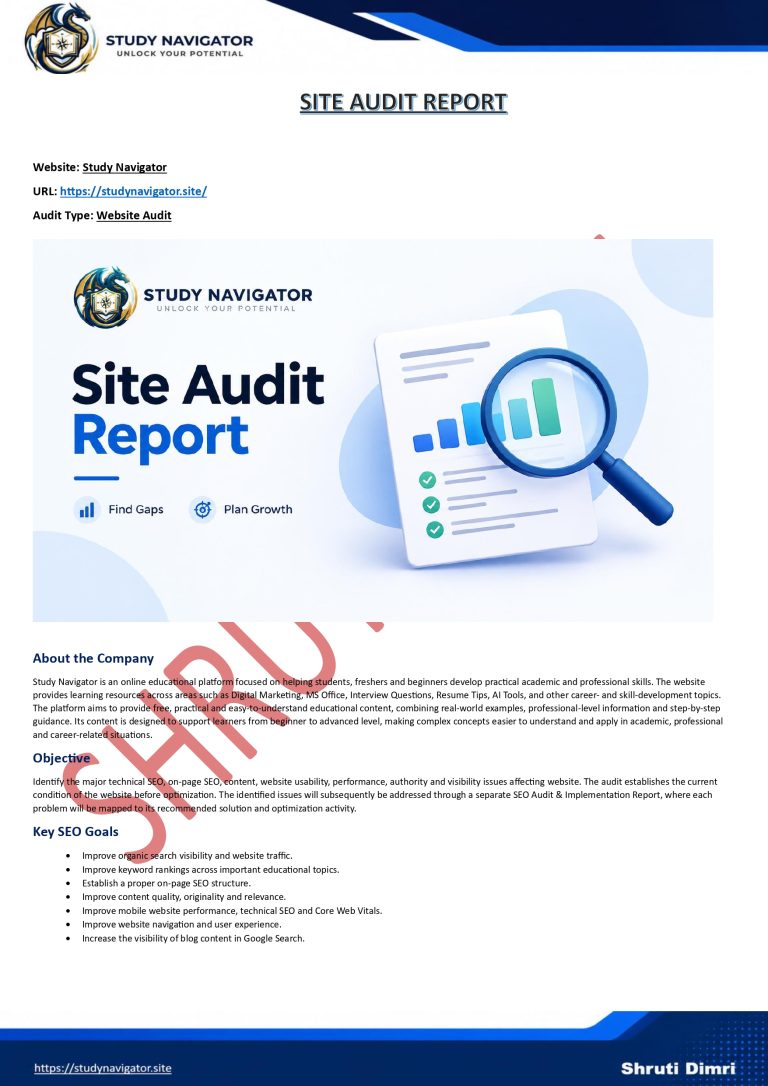
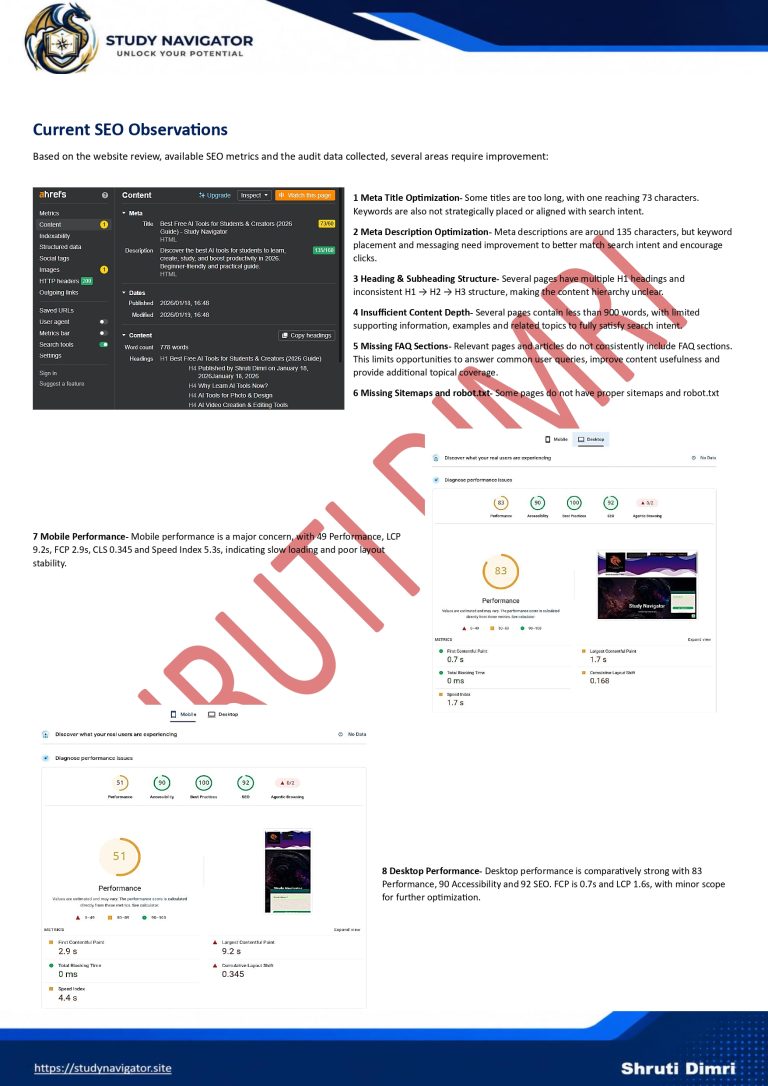
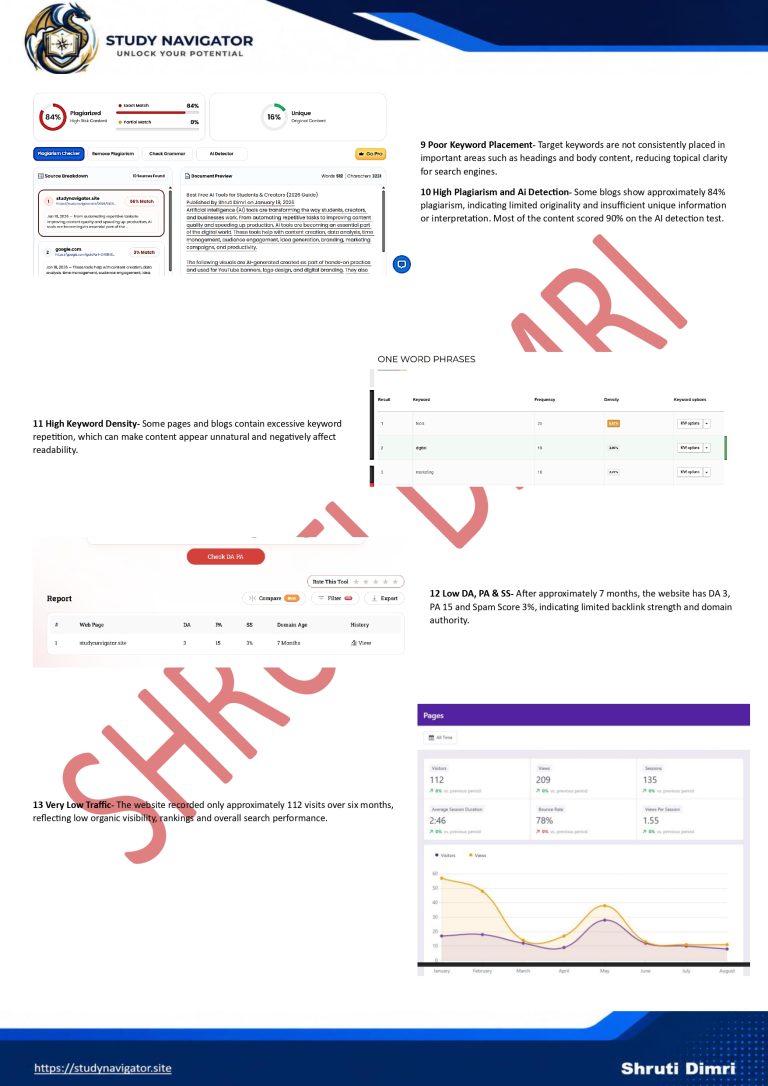
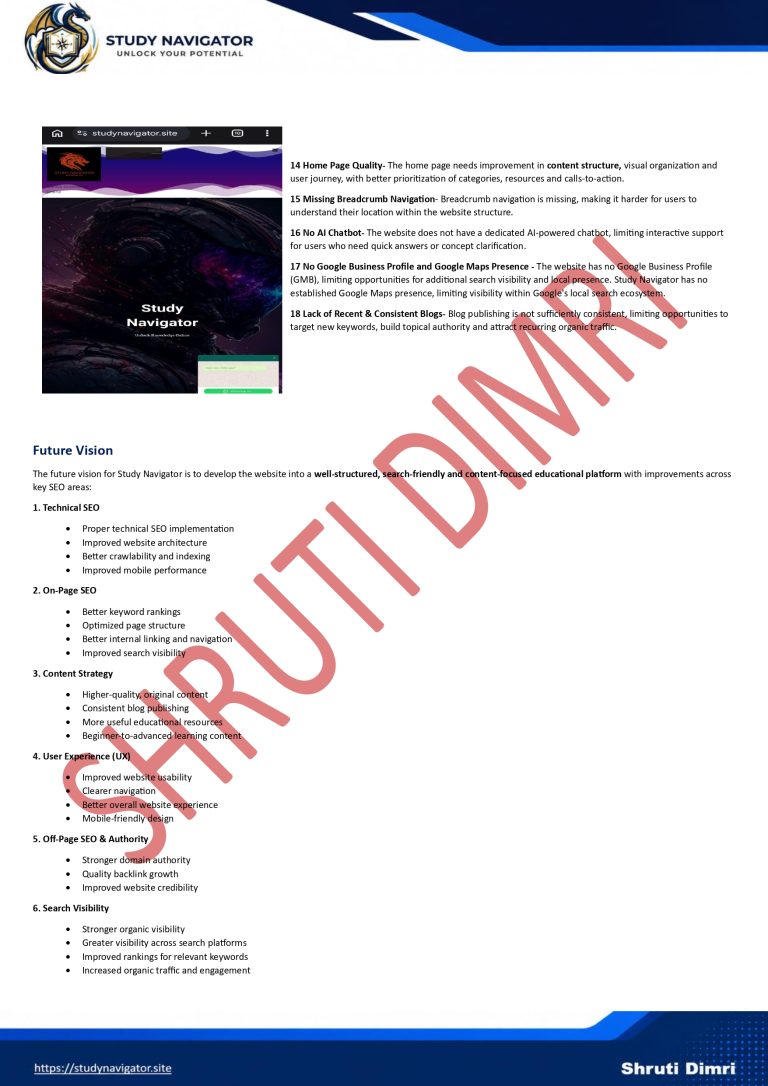
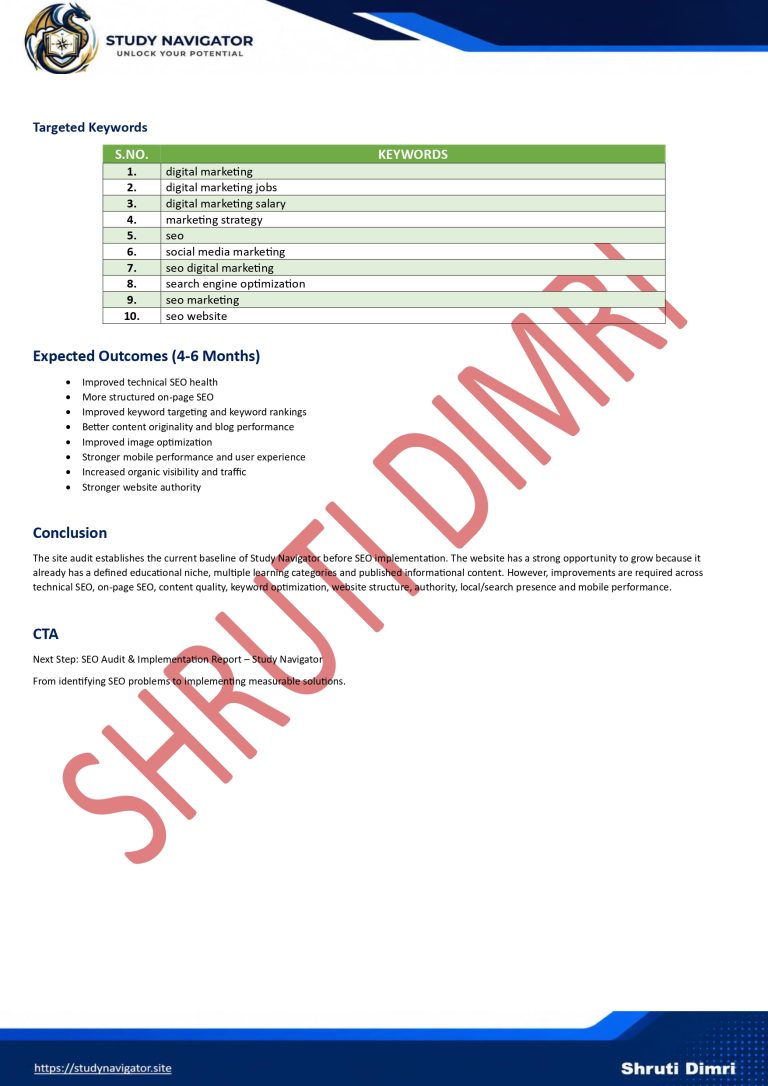
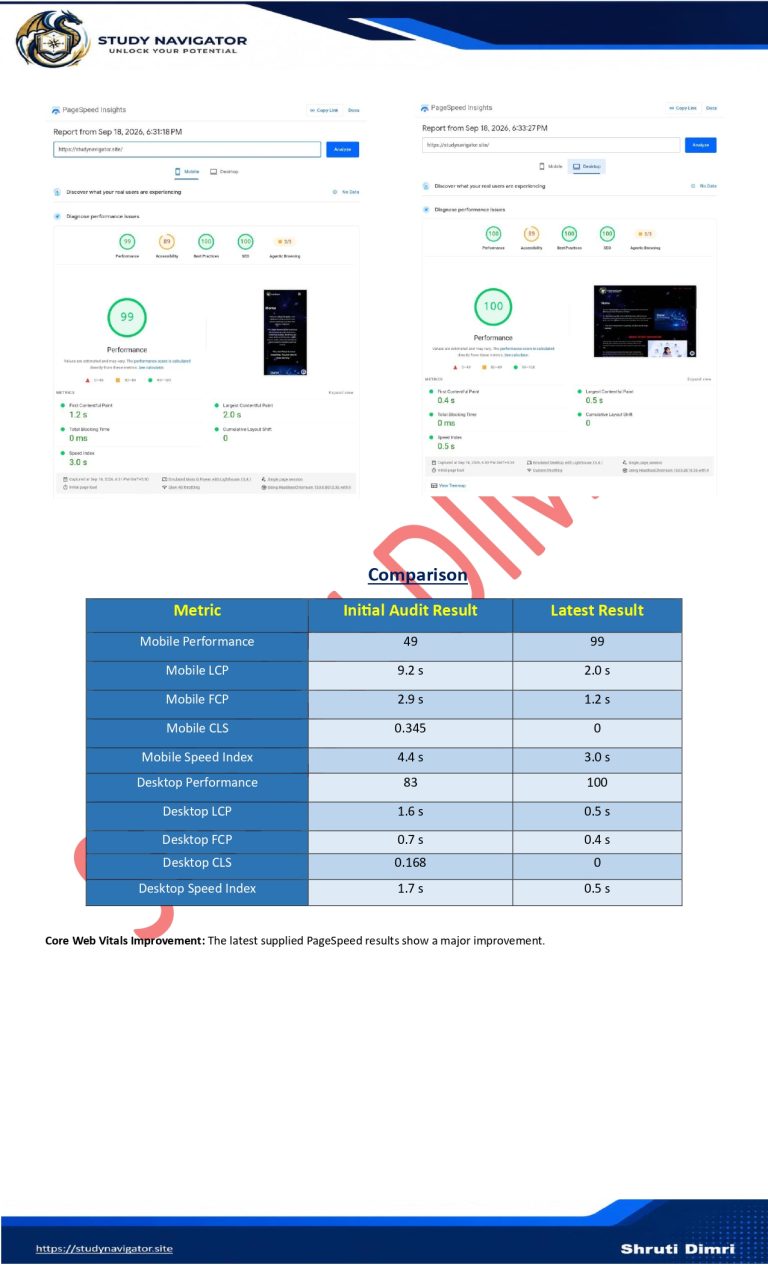
Problem: The initial audit found issues with Core Web Vitals, metadata, headings, content depth, navigation, breadcrumbs, homepage quality, FAQs and overall website structure.
Solution: Improved technical performance, website structure, homepage, navigation, breadcrumbs and content-related elements.
Outcome: A stronger technical foundation and improved overall website performance.
SEO AUDIT REPORT

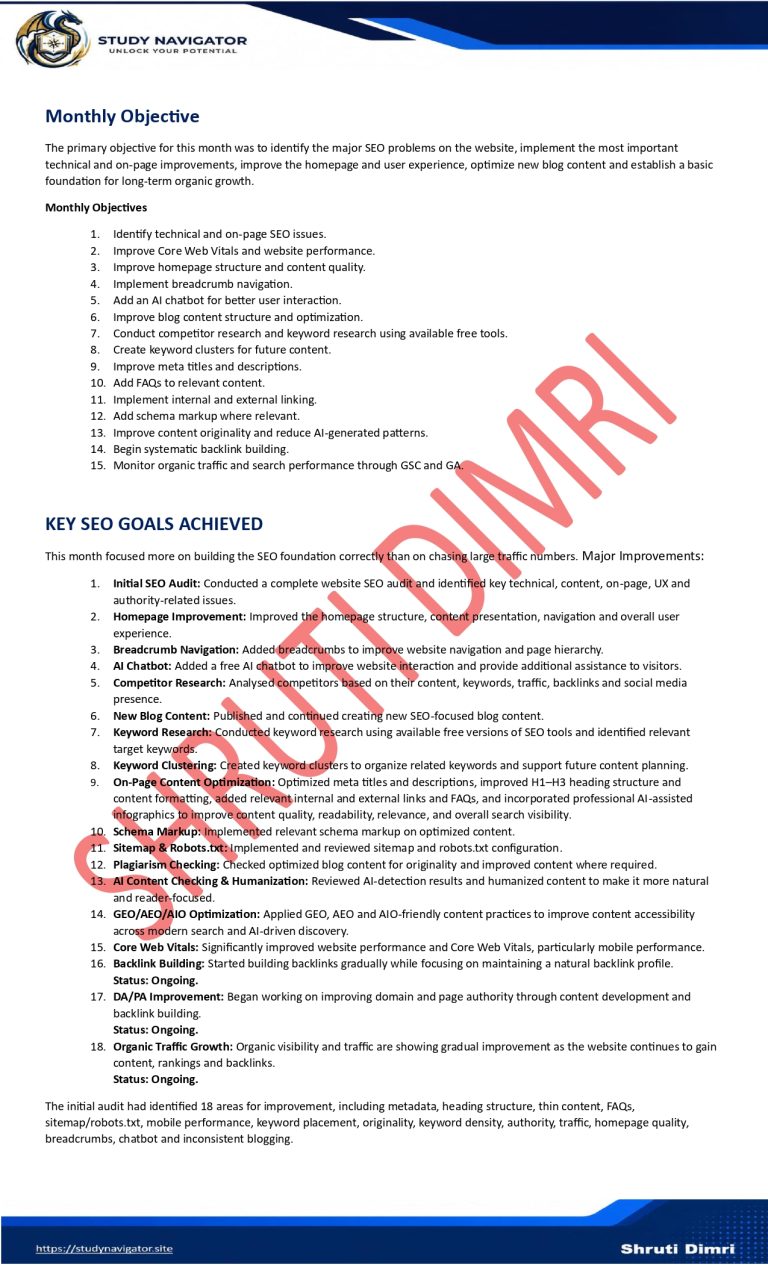
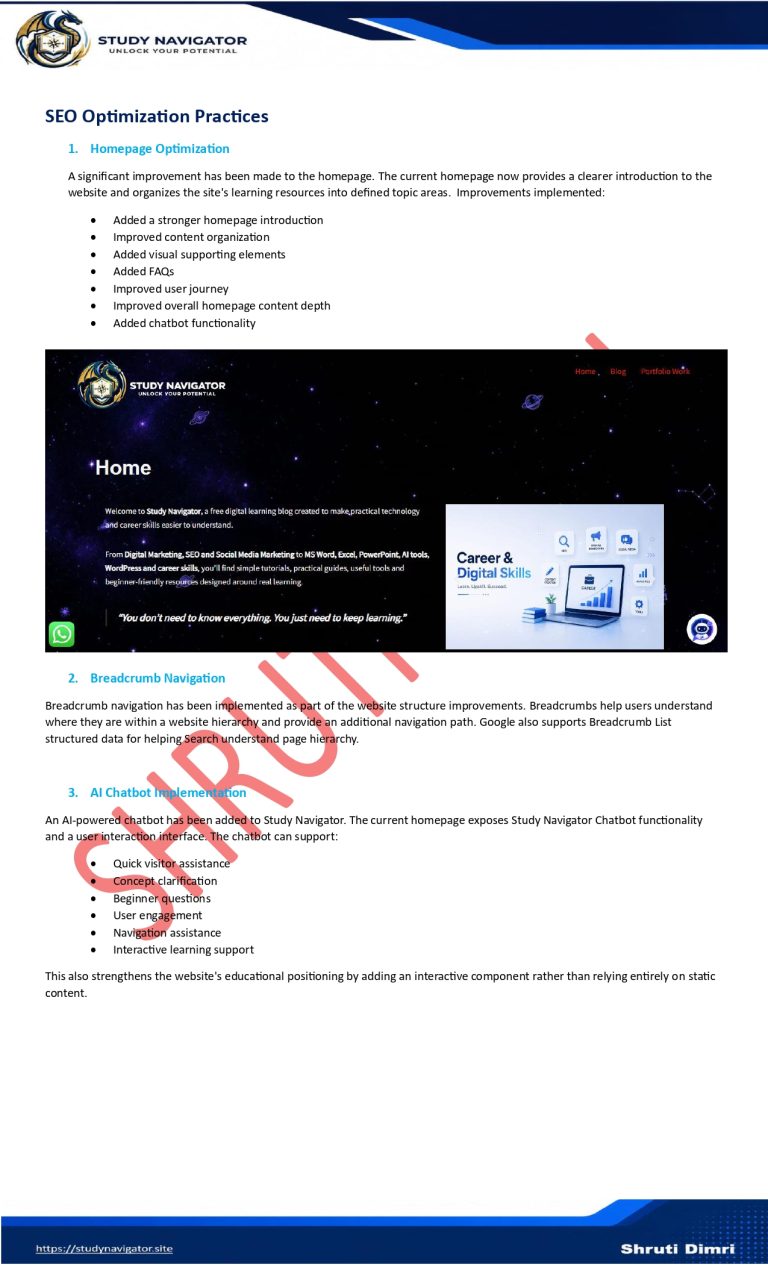
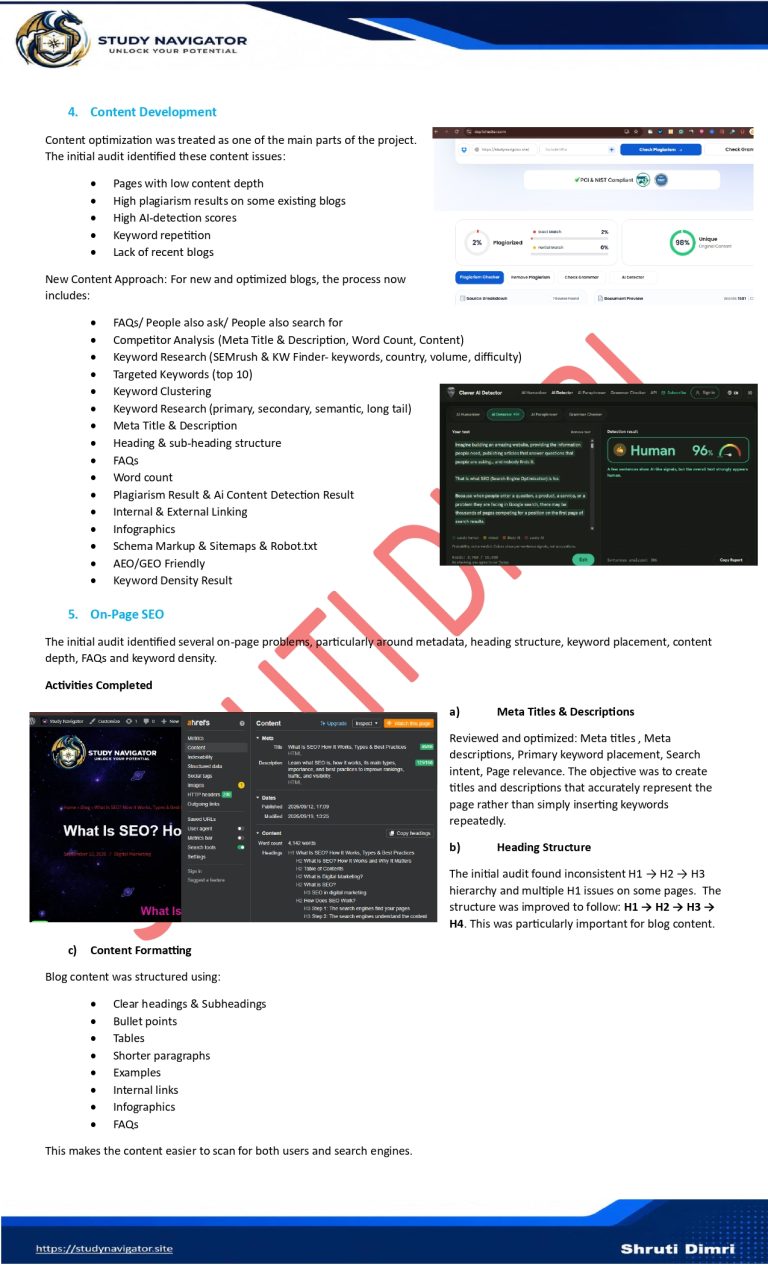
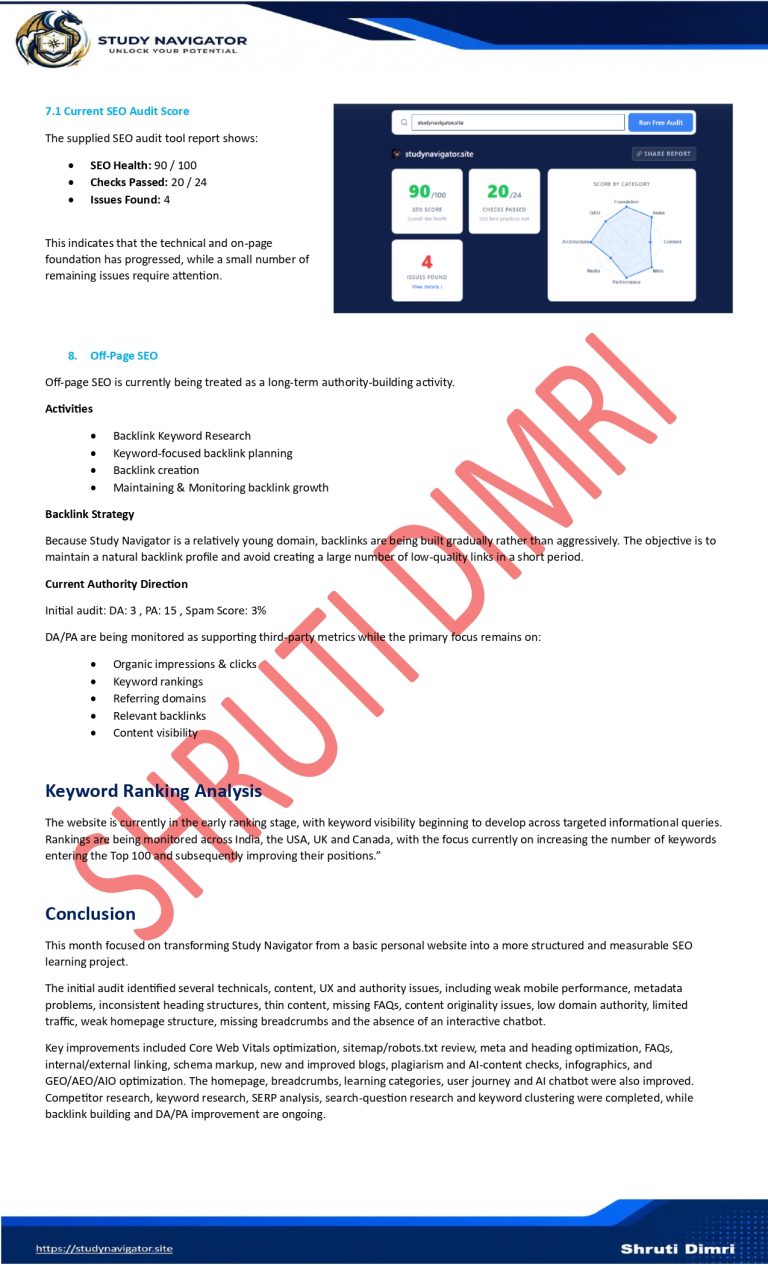
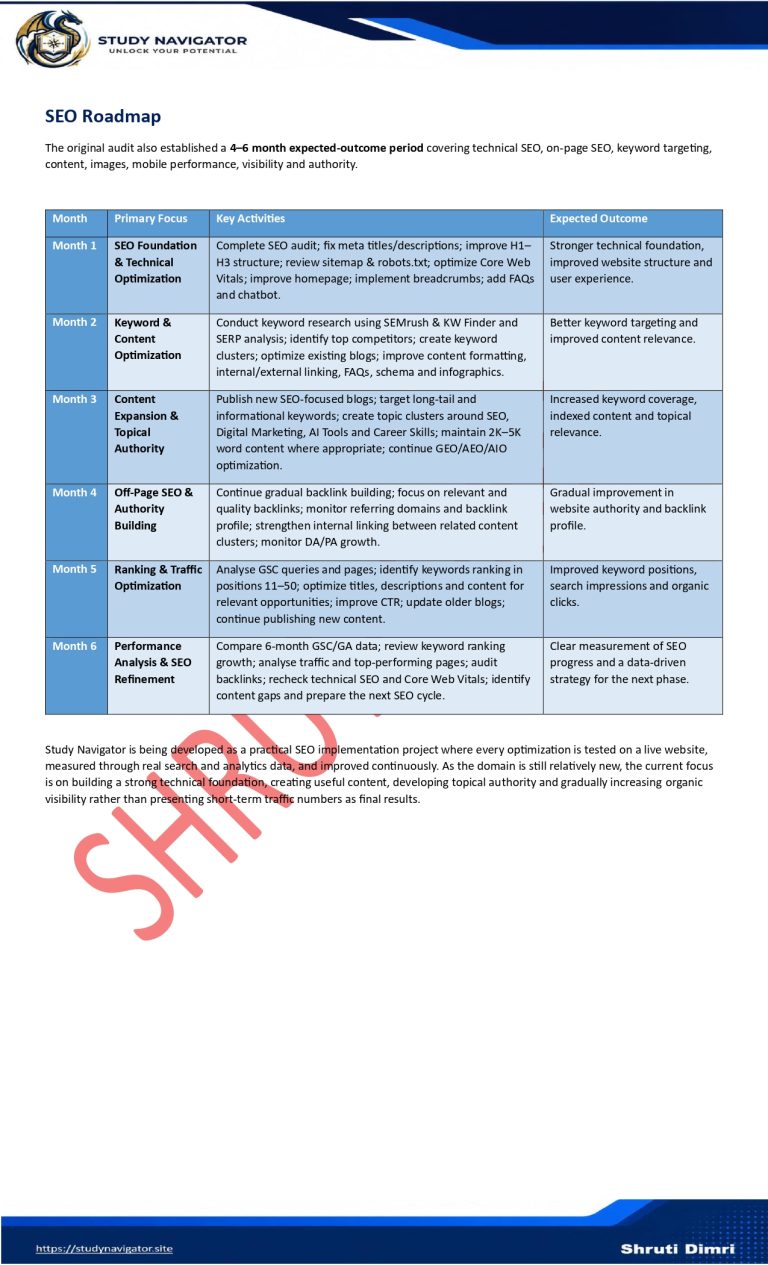
Problem: Issues were identified in meta optimization, heading hierarchy, keyword usage, content quality, linking, FAQs, schema and GEO/AEO/AIO readiness.
Solution: Optimized metadata, headings, content, keywords, internal/external links, FAQs, schema and visual elements, with plagiarism and AI-content checks.
Outcome: More structured, search-focused and user-friendly content.
COMPETITOR & KEYWORD RESEARCH
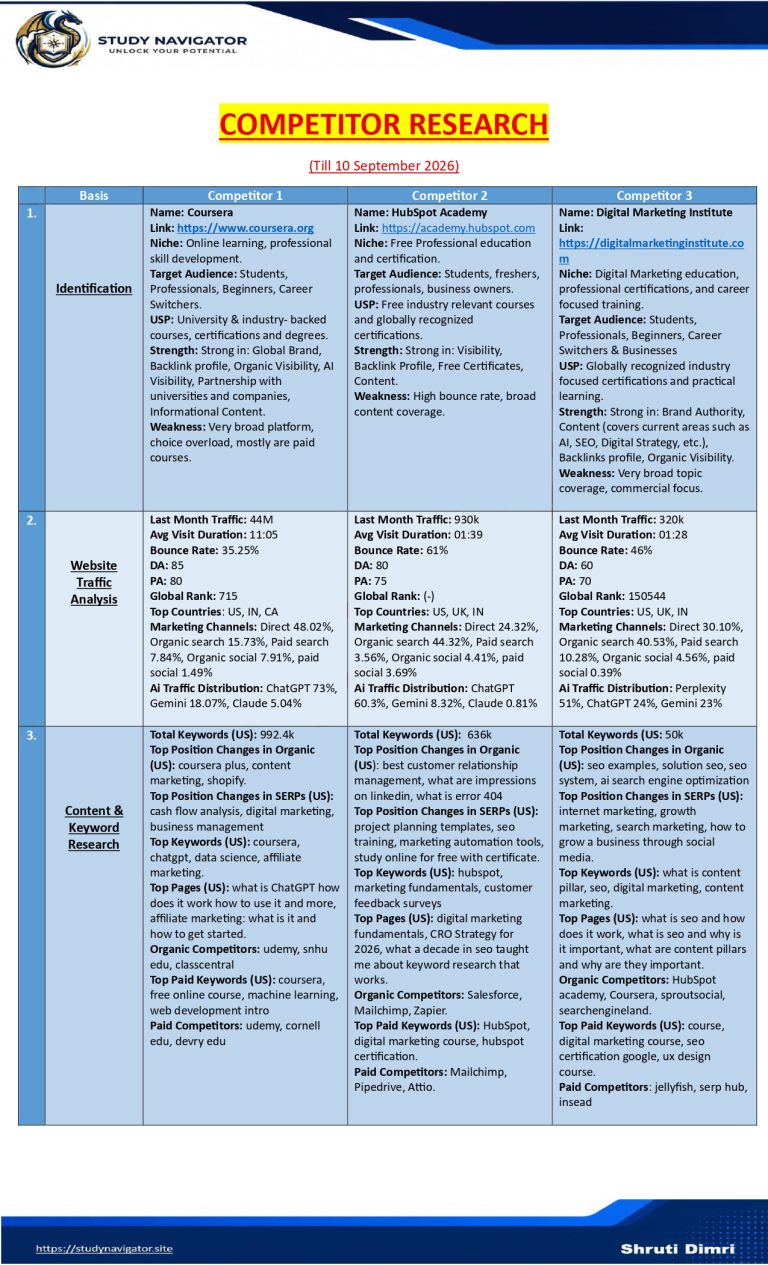
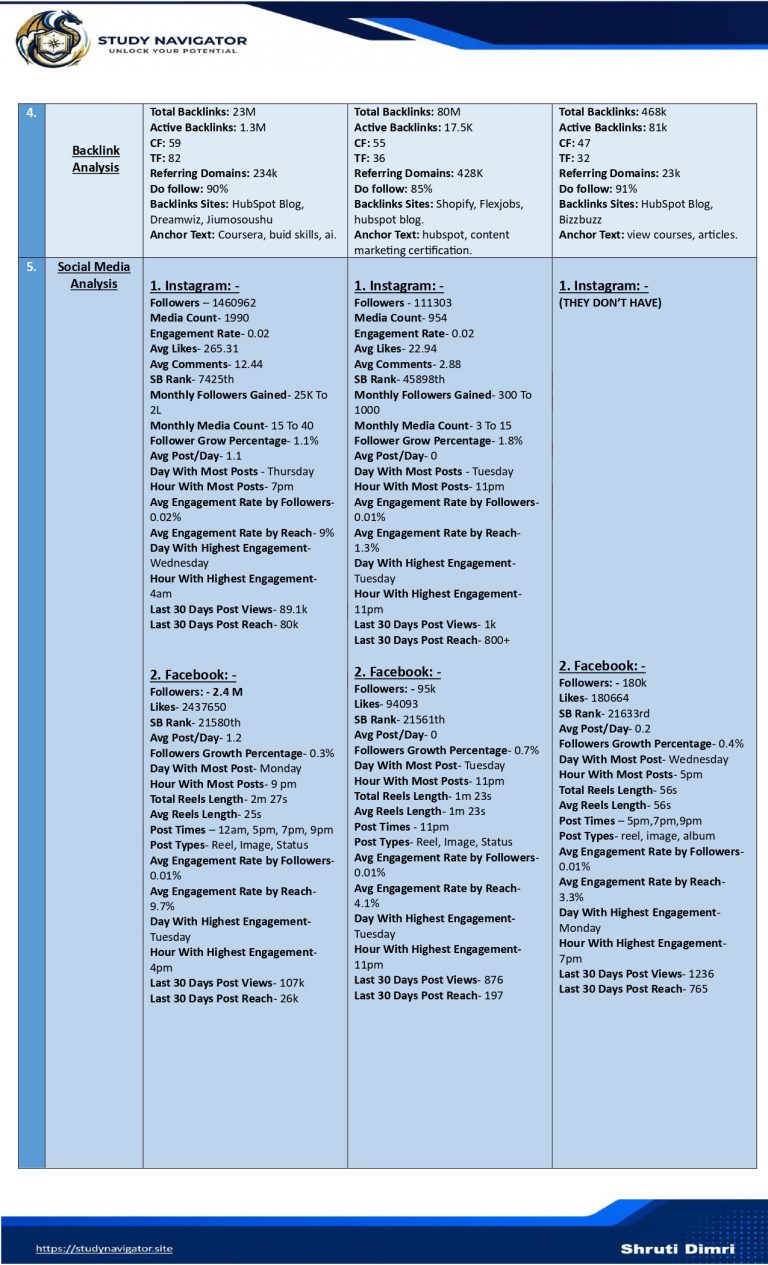
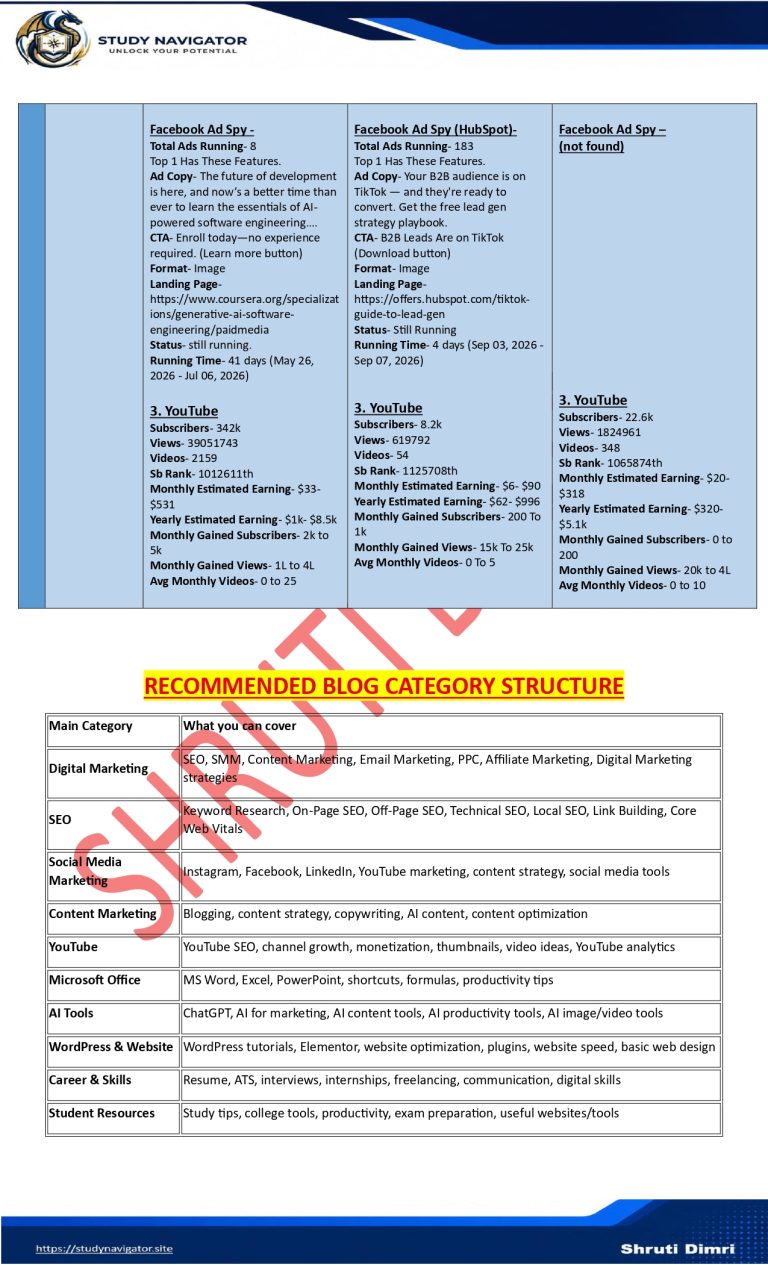
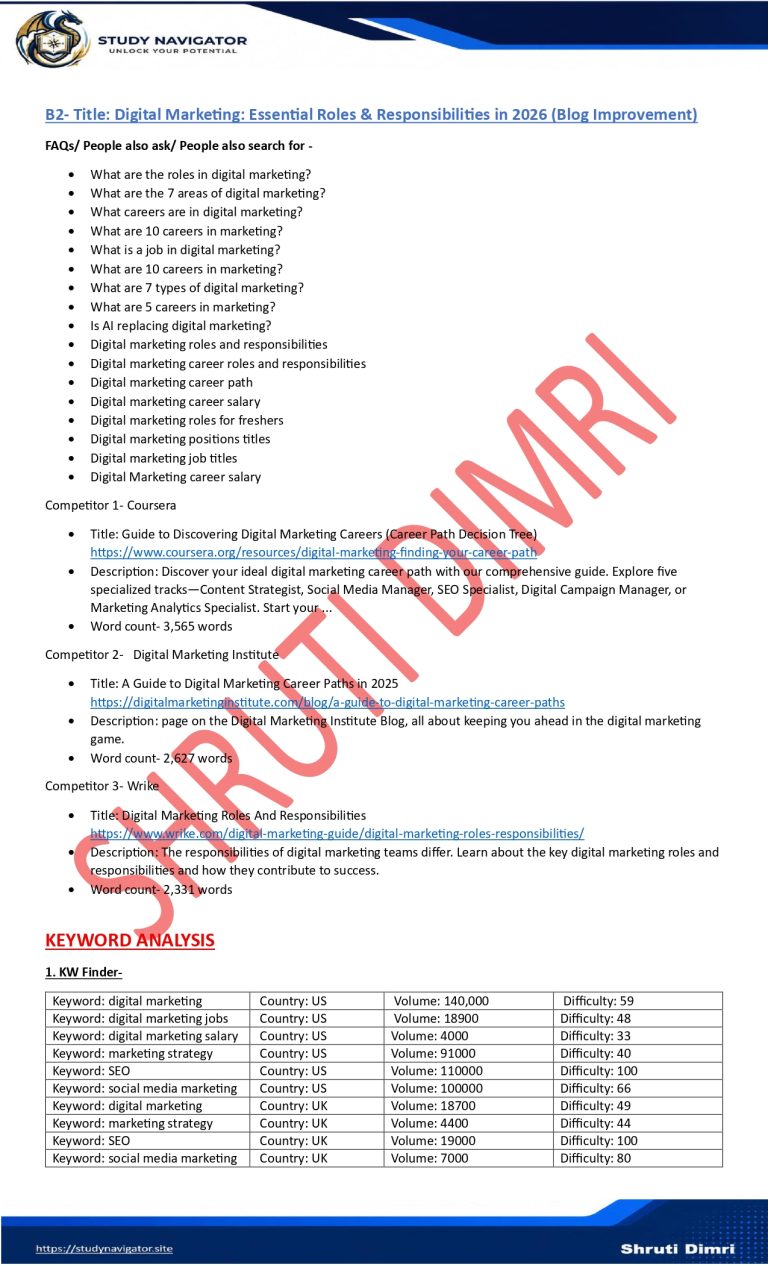
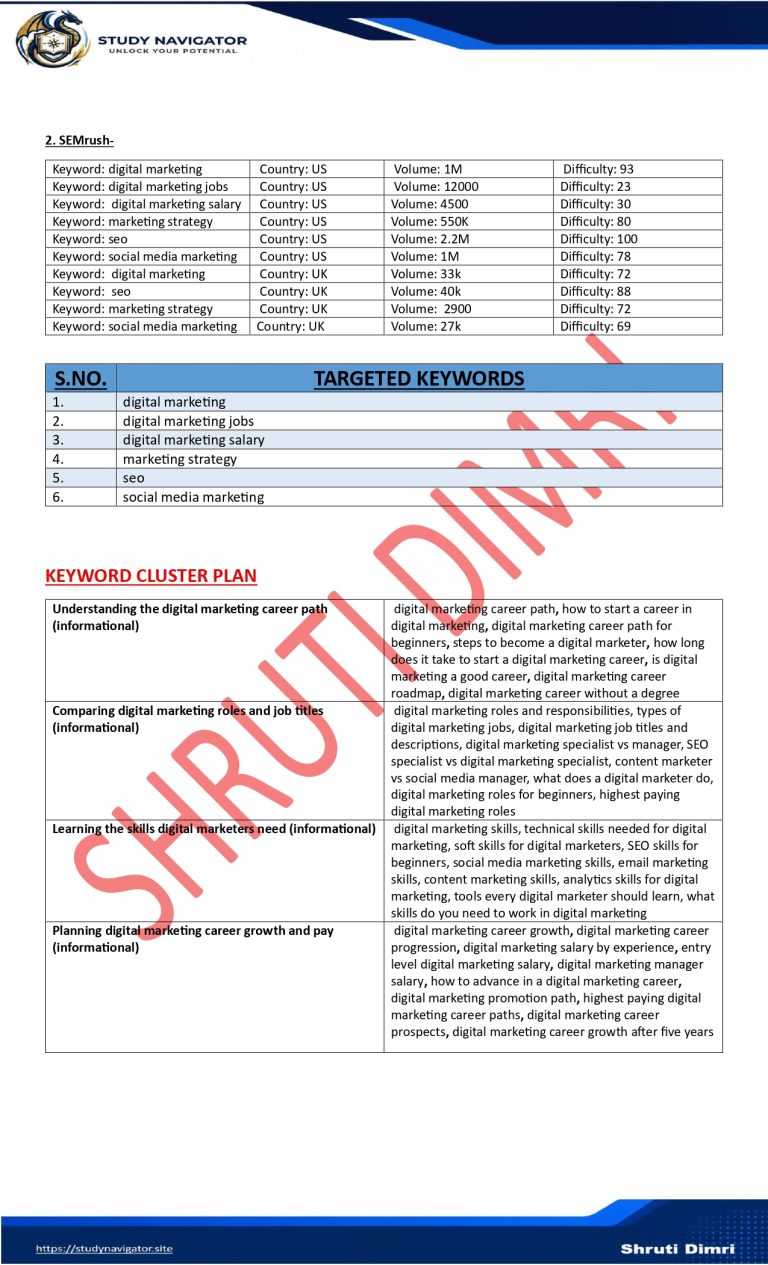
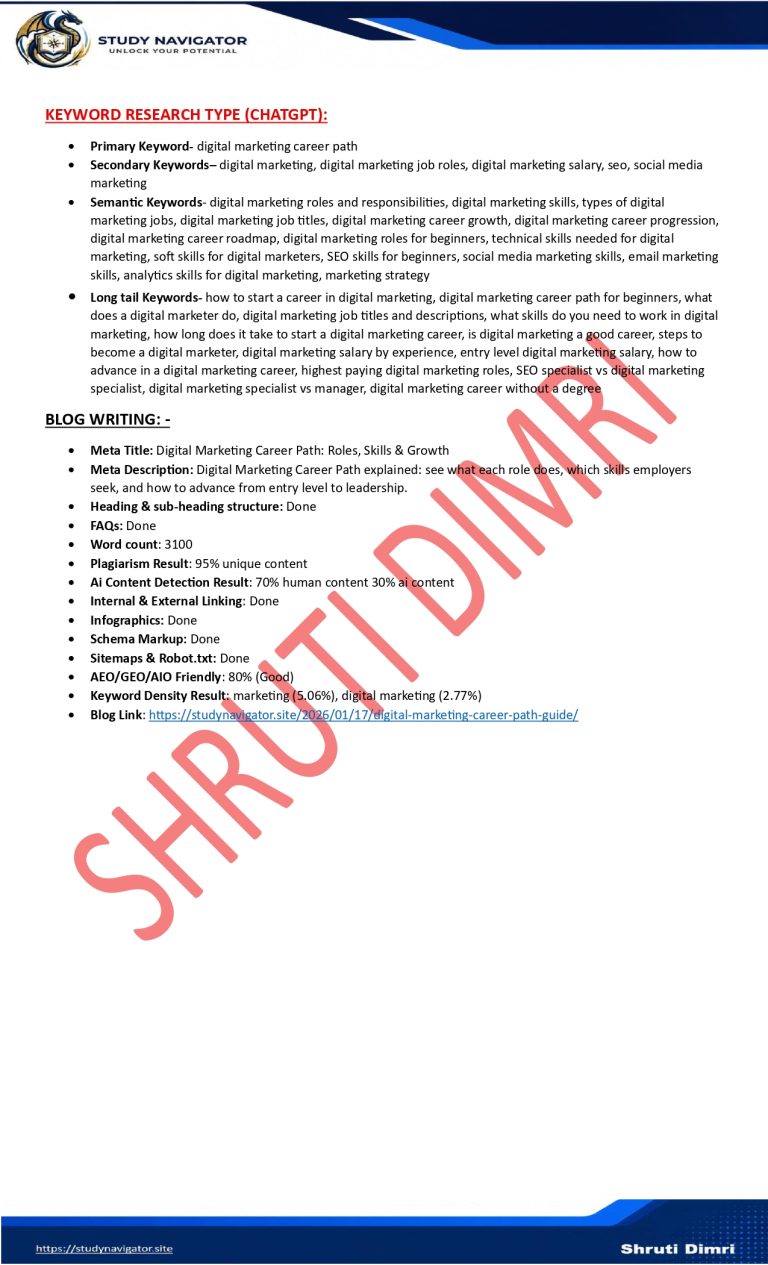
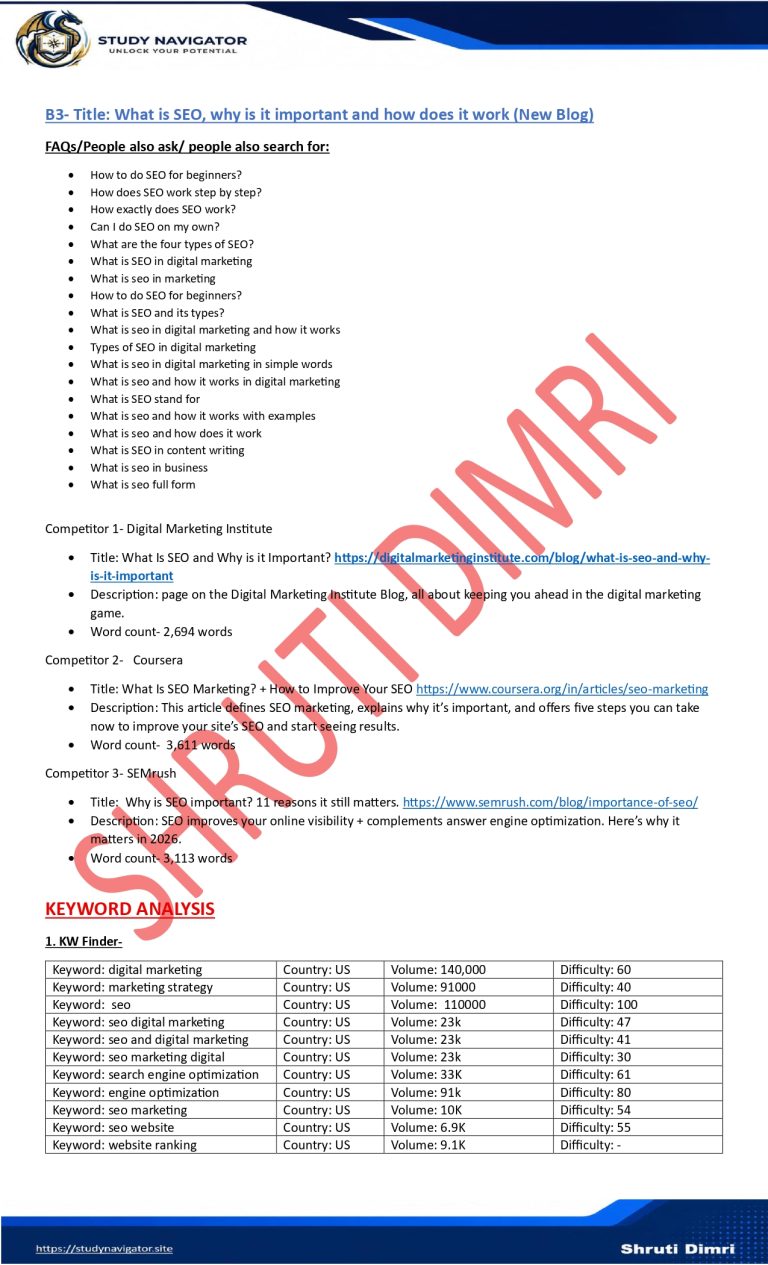
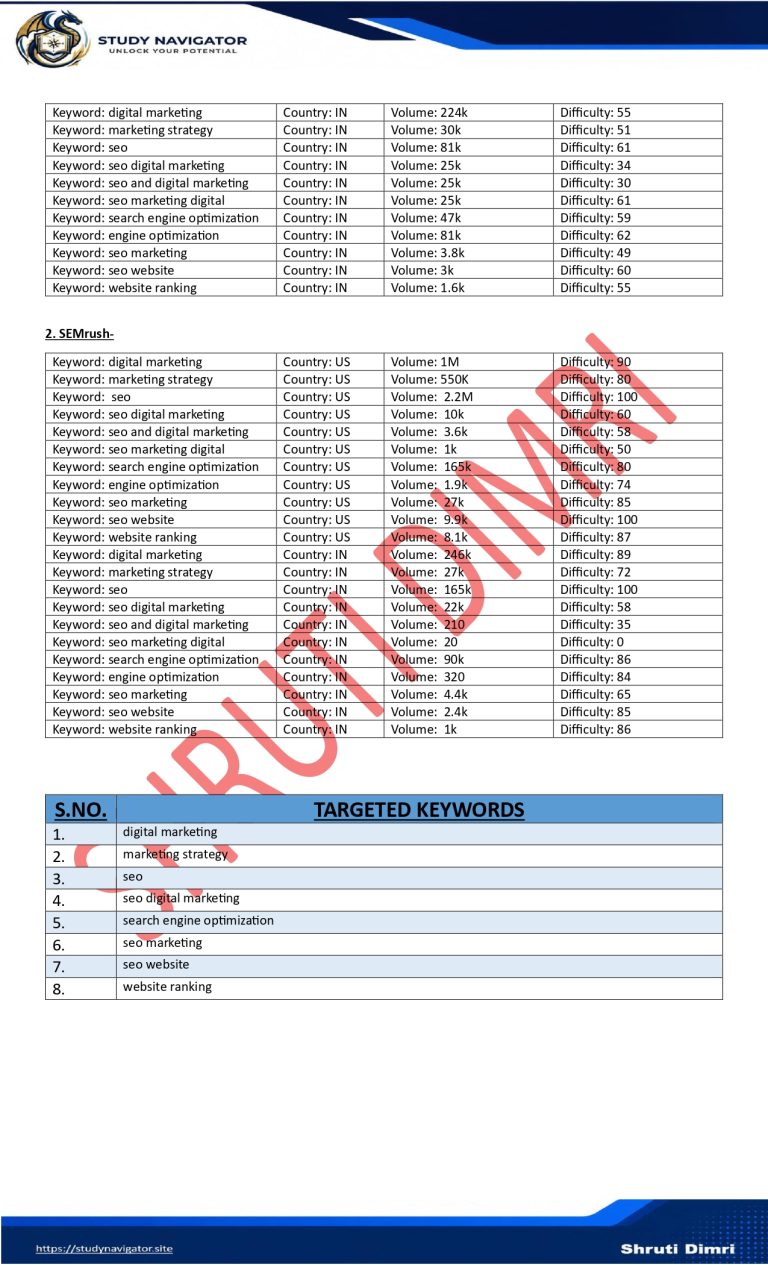
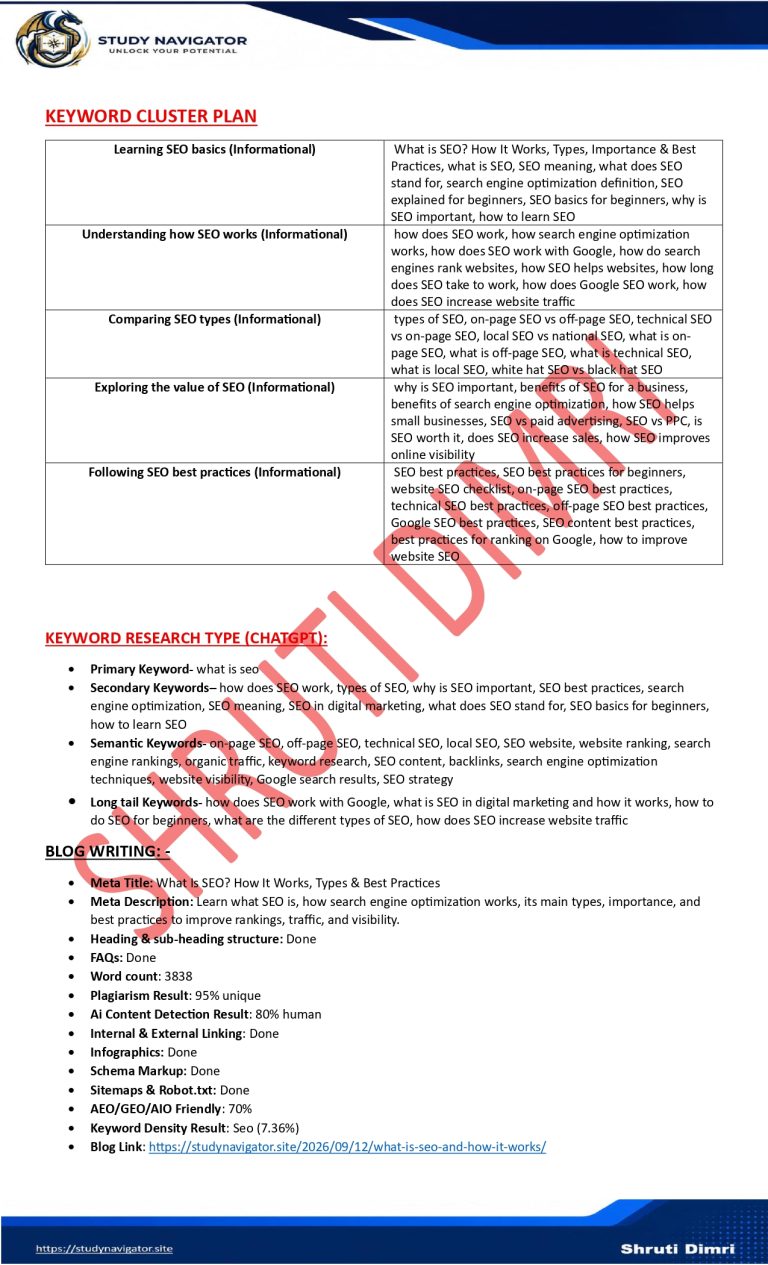
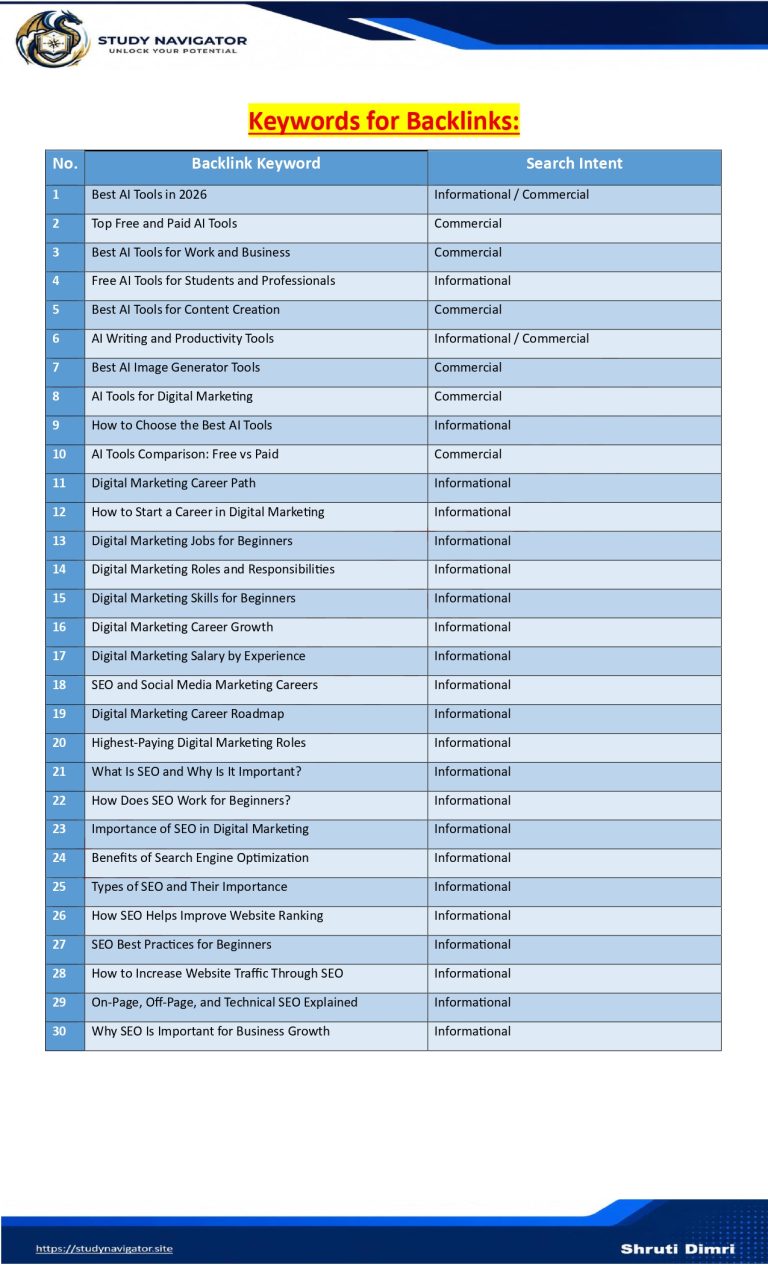
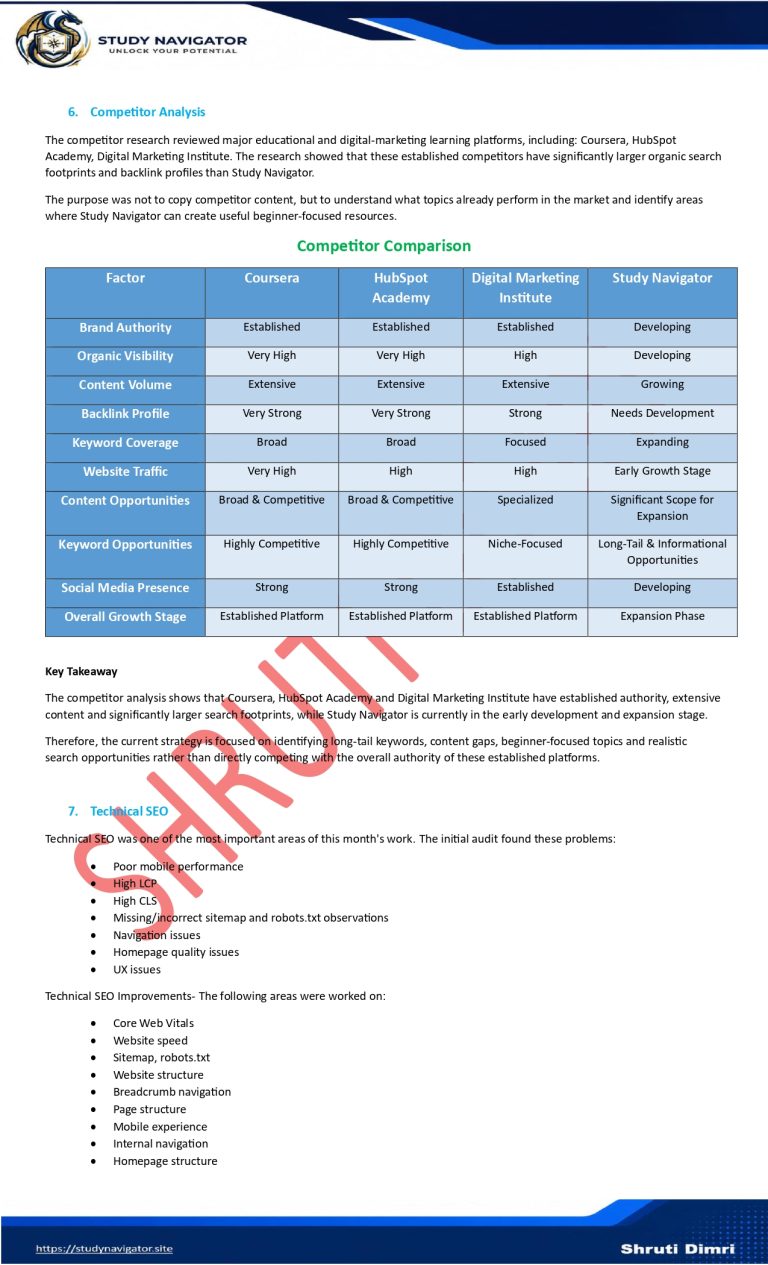
Problem: Study Navigator is a developing website competing with established educational platforms with much larger content and authority.
Solution: Researched Coursera, HubSpot Academy and Digital Marketing Institute, along with keywords, SERPs, search questions and content gaps using SEMrush and KWFinder.
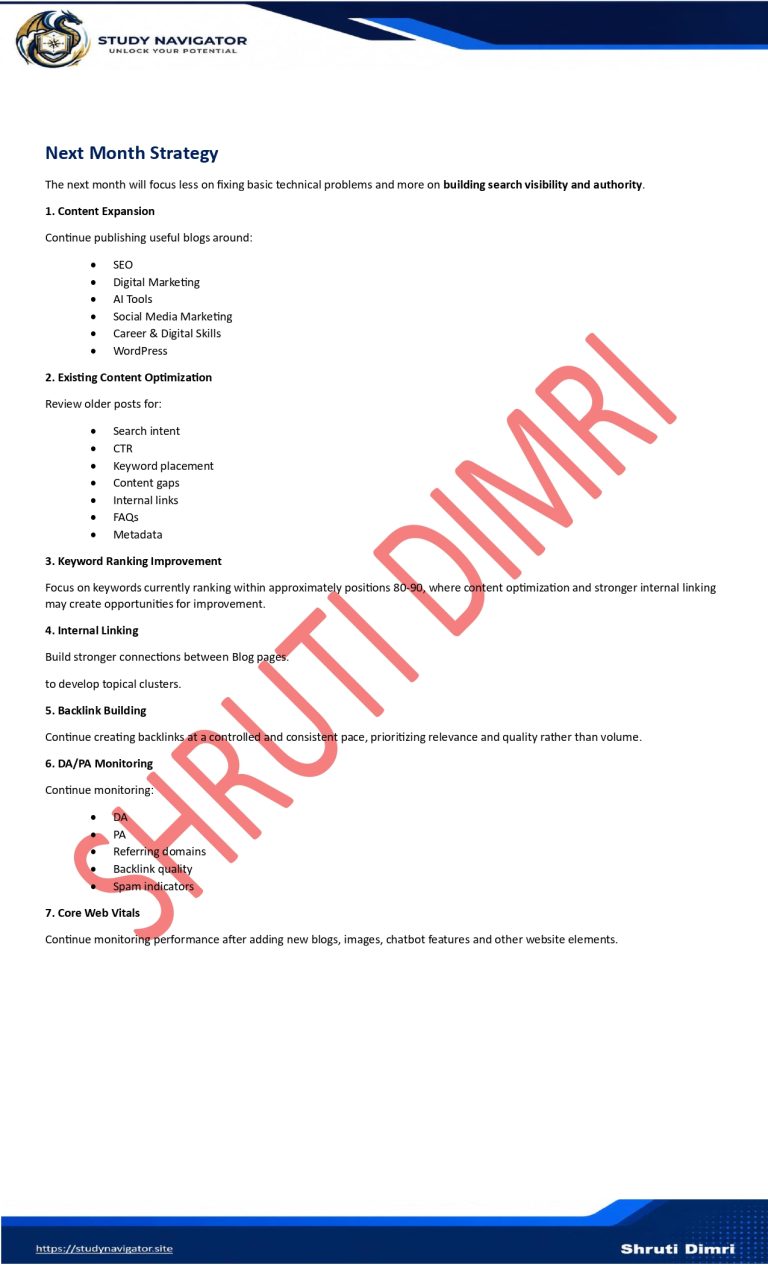
Outcome: Identified realistic long-tail, informational and beginner-focused keyword opportunities and created a clearer content strategy.
Social Media Analytics
UNDER PROCESS
Ads Research & Analysis
UNDER PROCESS
Conclusion
Study Navigator is more than a website where content is published. It has become a practical environment for learning how digital marketing actually works when research meets implementation.
The project began by identifying problems across technical SEO, content, UX, authority and visibility. It then moved into keyword research, competitor analysis, content optimization, Core Web Vitals improvement, backlink building and performance monitoring. The process also expanded into social media analytics and advertising research across Facebook, Instagram, Pinterest, YouTube, Meta Ads and Google Ads.
The work is still developing, and that is an important part of the portfolio. The objective is not to present Study Navigator as a finished case study, but to document real learning, real implementation and measurable progress as the website continues to grow.
Frequently Asked Questions
1. What SEO work is included in this portfolio?
The portfolio includes site audits, technical SEO, on-page SEO, Core Web Vitals, keyword research, competitor analysis, content analysis, backlink research and SEO implementation.
2. Which social media platforms are analyzed?
The social media research covers Facebook, Instagram, Pinterest and YouTube only.
3. What advertising platforms are included?
The advertising research covers Meta Ads for Facebook and Instagram and Google Ads for websites and YouTube.
4. Are these real SEO projects?
Yes. The reports document practical work carried out as part of the Study Navigator live website project, including auditing, research, implementation and performance monitoring.
5. What tools were used for keyword research?
Available free versions of tools such as SEMrush and KW Finder were used, together with SERP research and search-question analysis.
6. Why is competitor research included in an SEO portfolio?
Competitor research helps identify existing content patterns, keyword opportunities, backlink differences, search gaps and areas where a developing website can build its own content strategy.
7. What is the purpose of this portfolio?
The purpose is to demonstrate practical experience in SEO, competitor research, social media analytics and advertising research through documented project work rather than theory alone.
Check out our latest blogs post- BLOG
Follow us on other platforms- LinkTree